12hr Supported Recumbent WR
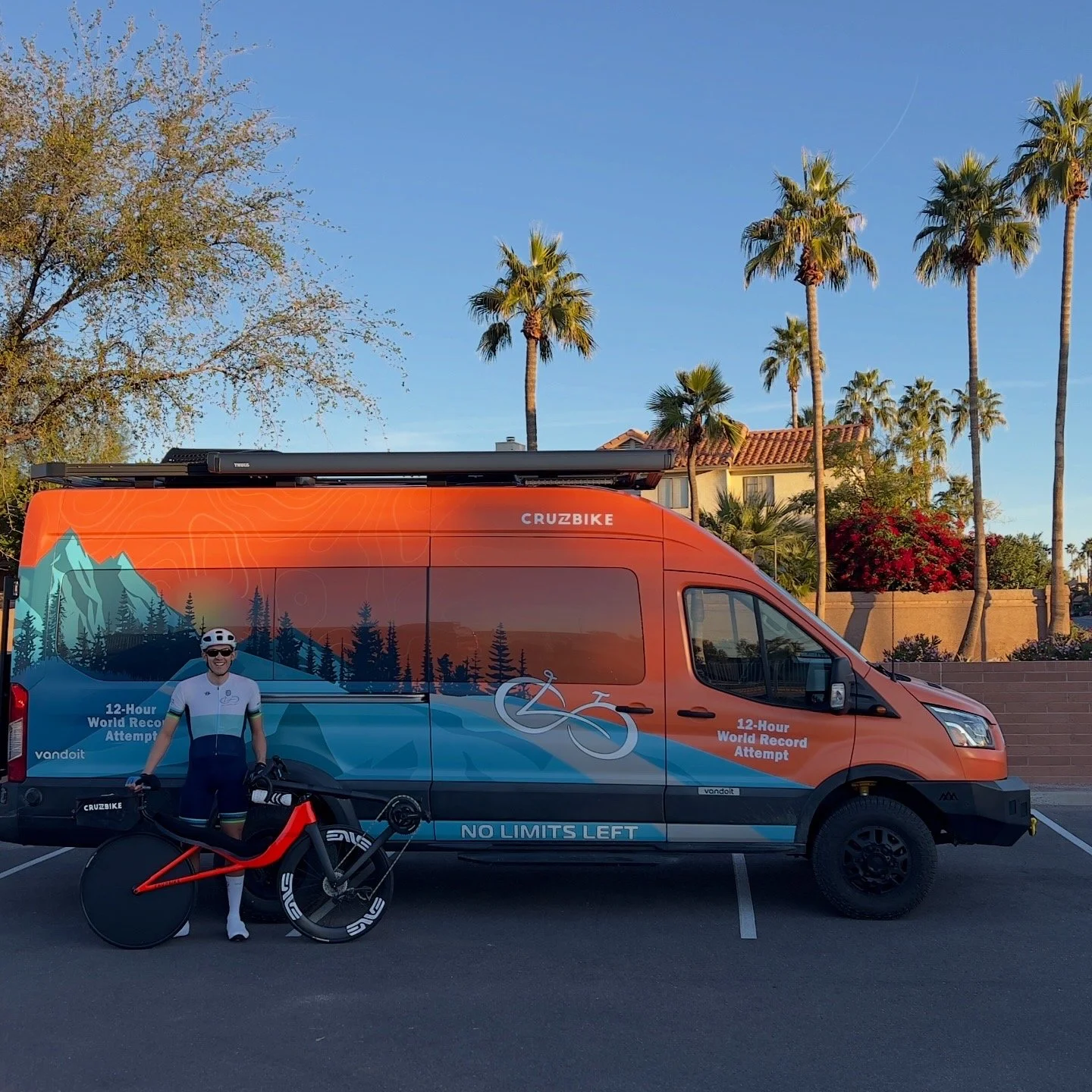
After breaking my collarbone in early October, the end of my year changed drastically. Eight days later I had planned to do a 12 hour gravel world record attempt to finish out my WUCA World Cup and have all my events done for the year, so I could focus on training for 2026. Well, it would’ve been easy to call it quits for the year after breaking myself and requiring surgery; however, that is not the Lefthand—'No Limits Left' way.
In a matter of a week and a half, I was having surgery for my collarbone. The surgeon and I decided to plate the collarbone on both top and bottom in order to make it stable. This allowed me to get back on the indoor trainer incredibly fast and start to think about how I was going to end the year.
CRUZBIKE
To many, it appeared that I injured myself on a training ride and then went to riding a recumbent bicycle because of my injury. However, riding the recumbent Cruzbike was always part of the plan after the gravel world record attempt.
Jim and Maria Parker reached out to me in the Fall, asking if l had interest in trying their recumbent bike in future ultra events. After a few conversations, I thought it would be worth giving it a shot, but I needed to finish out some of my pre-planned rides for the year. So, the idea was to finish up the gravel world record, attempt, and immediately use the rest of the Fall for training on the Cruzbike.
The Cruzbike is an incredible machine, but it comes with a large learning curve. Both Jim and Maria as well as other Cruzbike specialist such as Larry Oslund have impressed upon me the importance of getting 1,000 training miles in before you really know what you’re doing.
THE PREPARATION
With a broken collarbone, I was not in any sort of condition to put in the time outdoors on it that I had wanted. However, I was able to get it set up on my trainer at home and start to build fitness in the new position. I was not able to test the position outside to see how it actually was working. But, it allowed me to strengthen the muscles that would be used when I did get back outside.
After healing was progressing nicely, my wife and I decided that we would take a trip in the early part of December to somewhere warm to do a training ride on the recumbent. At the same time, I still debated finding a way to do the gravel world record attempt in the middle of winter at home, in Northern Utah.
After talking about the logistics of completing that attempt at home, I thought about how I could potentially go for the 12 hour recumbent world record. This was pretty audacious, as I had not put in the outside time needed and I wasn’t even sure that I could get ready in time.
For Thanksgiving, we visited family in Southern Utah where the winter is more mild and I took the Cruzbike to try and get some more time on it. My last training ride did not leave me super satisfied with my ability on the bike, the bike and I were not in tune.
However, I noticed after that ride that my headset kept coming loose. Once I got my headset set up right and I got my position better on the bike, my legs were allowed to fully extend without affecting the steering. I was then fully confident that I could try and make an attempt fairly quickly, if only I had some more time outdoors on the Cruzbike.
PHOENIX, ARIZONA
We scheduled to travel to Phoenix, Arizona, where we had a course surveyed for a record attempt. Working with Laura and John Crawford, fellow Cruzbike riders and crew members from Race Across the West, they helped find and test the route and adivised me in gear selections such as what was needed to carry my hydration, and make adjustments to my fit so my head was supported while riding the bike.
I took a few days before the record attempt to ride the bike outside, gaining more confidence each day.
The day before the attempt, we went to the course loop and it was my best feeling day on the bike yet. I still was pretty wobbly when reaching for my nutrition and hydration, but I was able to do all of it and not feel like I would crash.
THE ATTEMPT
So, it was game on! Everything was ready. Maria Parker had flown in to help officiate and crew the event and my family was there to support. My dad drove from Utah with my cousin, Amber, who helped with our kids during the event. My mom is finishing up cancer treatments. She’s on the last leg of radiation and so has not been feeling up to traveling. It’s been a hard season, not having her able to come along, but she’s finally in a place where there’s light at the end of the tunnel and she’s looking forward to coming to more things next year. My 2025 race season was dedicated to her.
The morning of, I was my normal, cool-calm-collected self. That’s the only way I know how to do it. I am not a rally or war-cry type of person, if I allow emotions to get high, it turns into anxiety and stress. So I’ve learned to keep myself locked in. I tune out as much as I can, and only pay attention to the things that I have to.
My thought process: I have good crew. I have good family. I have what I need to to get this done and I kept reminding myself that this was just training and practice. I was not there to pull everything I could out of myself. I needed time on the bike and to gain experience. If I did everything right, I would get more proficient at the bike throughout the whole process and feel more and more comfortable. That was the point of this ride.
Remember that Maria and Jim Parker said that 1,000 miles were required to feel good on the Cruzbike. Well, I had 380 miles (outdoors) on the bike before this ride and I put another 314 official miles on the bike during the attempt. That still put me under the 1,000 miles, demonstrating once again how brave (or some people might say stupid) this world record attempt really was.
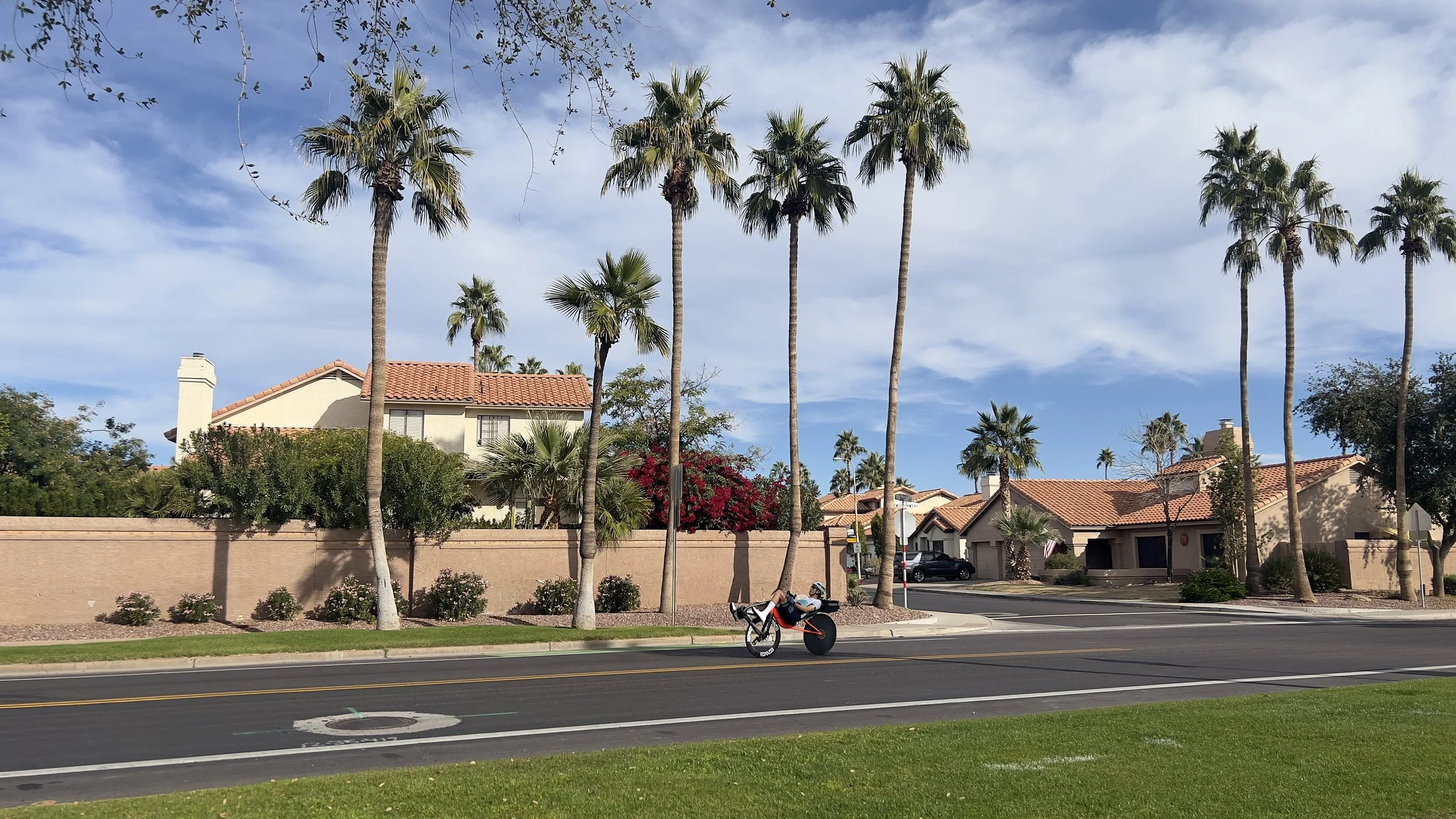
In true ‘No Limits Left’ fashion, I took on the challenge and it went exactly as I had envisioned it. Nutrition, hydration, stops, power (crank length was set wrong so my power was reading high but I adjusted it in my head and paced accordingly), heart rate—everything was spot on. I rode at a level that could show the benefits of the bike, but also didn’t take too much out of my body since I had a lot of stressors of still learning and getting comfortable.
I knew that I wasn’t leaving everything out on the course. I also knew that we had a long way to go in getting the most aerodynamic set up. Essentially, I knew that I was leaving a lot on the table.
As I neared the end, I was interested to know exactly how much I had left on the table. When you are nearly 12 hours into a ride and you have been working at a good pace, you can get a really good idea of your fitness by trying to push a little bit harder and seeing how much you have left in the tank. If you go to hit the accelerator and fall flat, you know pretty well that you’re tank is empty.
My last several laps were very fast, I had plenty left in the tank, including pushing hard enough to average nearly 30 mph the last two laps. Hitting high speeds near 35 mph. I knew that I had left plenty in the tank and could do a lot more in the future.
Record Statistics
Distance (miles): 313.956
Distance (km): 505.263
Speed (miles/hour): 26.16
Speed (km/hour): 42.11
THE STRUGGLE
Getting enough hydration on the bike was a challenge as I am not stable enough to always reach for the hose at this point. I had a couple big swerves on the bike as I was trying to fiddle around with the hydration hose which was the source of the bulk of my hydration. However, by later in the day, I was able to drink from it more efficiently and also use my water bottle more often, which was an absolute no-go prior to this attempt.
Getting my position right so I was the most comfortable was another issue. The adjustments to the lumbar support seemed right, but my neck and head were still not in the right position. I ended up having to move my head quite a bit off of the padded headrest because it kept getting sore throughout the day. I’m still working through this challenge, but it is one of those that was not comfortable and had I given it too much space it might have been the downfall of the record attempt.
I had a secondary GPS in the back of my bike for part of the record attempt, but it was either trying to connect to something in the support vehicle behind me or losing battery and beeping constantly over and over and over. Those first four hours, it took a lot of energy to tune this out.
I also felt pressure around the expectations of others. I’ve made a small name for myself and accomplished amazing things. I also had the CEO of the bike company there—watching me. There was a lot of pressure to perform and while many had made it apparent that they were happy to support me no matter what, that doesn’t get rid of the anxiety of wanting to put on my best performance and see pride in the eyes of those surrounding me. I knew this would cause anxiety if I gave it too much space.
I had to bring myself back to what I was there to accomplish and at the end of the day, dealing with what was in front of me and giving it my best would be good enough. I constantly reminded myself that I wasn’t trying to be as fast as I possibly could. I needed to be safe and I needed to be measured.
I’m thrilled with the results. John, Laura and Maria had plenty of time to watch me on the bike and give me many pointers (e.g. how to set up the bike to be faster, how to handle the bike better, and probably the most crucial, how to start from a standstill.) Since you lay down on the bike, balance is an inherent challenge. We are not used to balancing in that position and so there is a lot of learning to figure out how to move your body and how to put things in place so that you don’t tip over.
Once you get that down, you have to get good at starting the bike from a standstill, and there are a few ways to do this. Many people go for the Superman approach where you run a little bit and then slide down in the seat and put your feet in place. While this method is effective, it doesn’t help build the skills to get started in every situation and it is not inherently the fastest way to get started.
I think the best way is to start peddling with one leg and then eventually get the other foot clipped in. Without the experience of others, I had been trying to pedal once and then get my other foot clipped in as fast as possible. The bike is moving slow and often doesn’t have the inertia to stay balanced very easily. So I often missed my second foot or didn’t get in in time to get going fast enough to balance. During my second start of the day, I had a really bad start because I could not get my foot in at the right time.
Their simple advice to take a couple pedal strokes before trying to get my second foot in, allowed me to start the bike more proficiently the next few days and become extremely confident at getting started in a variety of situations and terrain.
THOSE WHO MADE IT HAPPEN
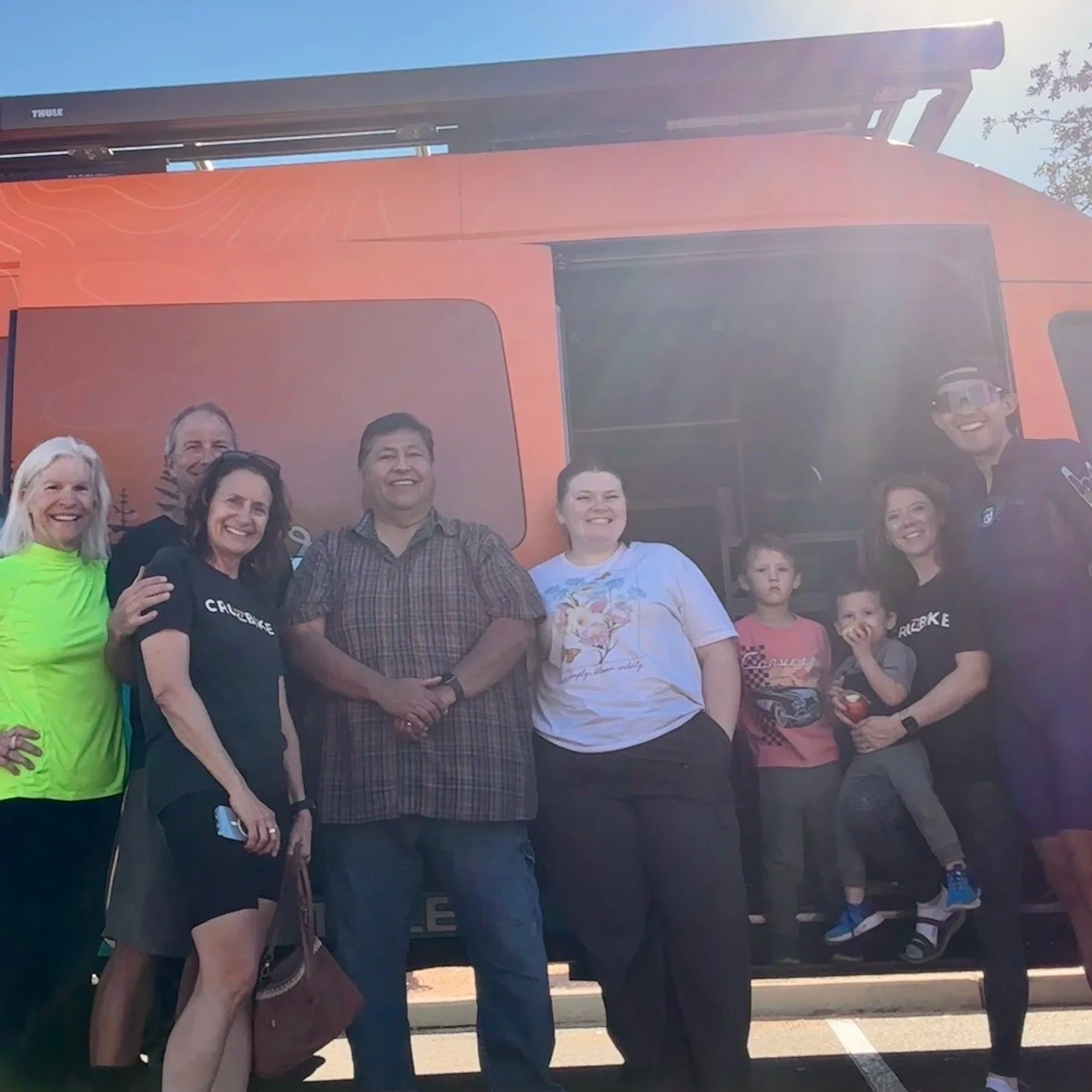
OK, now let’s talk a little more about the people that were involved—the amazing quality of supporters I had for this event.
For throwing something together in a matter of a couple weeks, it sure seemed like we had our stuff together. My dad and my wife took on all of the driving and were my official crew throughout the event. John and Laura Crawford had offered us to stay at their house, use their expertise on Cruzbike, and also help officiate for this WUCA attempt.
When Jim and Maria Parker found out that I was going to do the attempt, they wanted to try to make it out in support and to help if they could. Maria was able to fly in on Friday and to be there on Saturday for our test run and help out on Sunday as a third official. This was my first time meeting Maria and it was a true pleasure. The morning after the event, she had a morning flight and I drove her to the airport. We had a wonderful conversation. It was fun to learn about her family, life, and adventures.
THE NEIGHBORHOOD
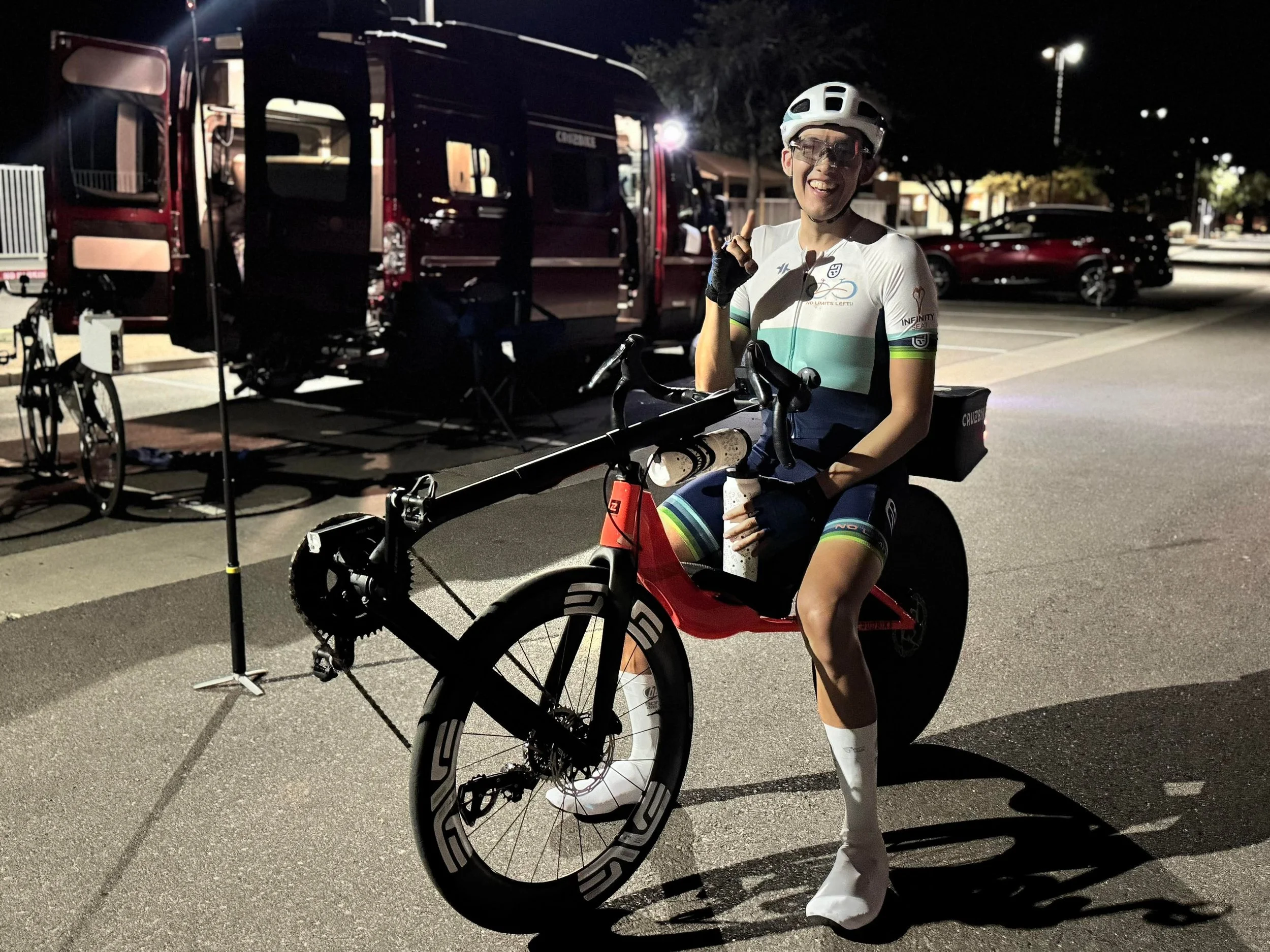
During the event, people in the neighborhood started to take notice. It’s hard to not notice when the same bike goes around a 2.4 mile track for 12 hours. I was literally in the same spot every 5 1/2 minutes or so. One of the residents made an announcement on the neighborhood Facebook page about what I was doing.
Somewhere around five hours in, one guy noticed me going around and around and started to cheer every lap. Eventually, he asked what we were doing, and my crew filled him in. I figured he was an average person who had some mild interest, but would return home and go about his life. Next thing I knew, he was back on the course cheering. For the next seven hours or so, I would see him throughout the day spending time in different parts of the loop cheering me on. At times, he had his family with him. It was fun to have such a devote supporter.
Neighborhood kids and families came to the finish line to celebrate with me. One family brough cookies and treats. Another family made signs. Others had kazoos and other noisemakers to cheer me on as I went by. I even heard people cheering me on from a balcony of a nearby apartment complex.
Earlier that morning, a lady was walking by and asked us what we were up to for the day. She came throughout the day, bringing balloons and treats and glow sticks for my kids. She was there at the finish 12 hours after we had first met her.
THE WHY
This reminded me why I put everything I do “out there.” As many may know, my professional job is a mental health counselor. I got into counseling to help people have a better life. Much of my professional job is to help people out of dark places. I really love that in cycling, or physical health journeys in general, people are going from a good place to a better place. Many people exercise and pursue physical fitness to deal with the challenges of life and to have more clarity. It not only brings you out of the darkness, but it also elevates you to a higher status and connects you with people who are doing likewise.
I love seeing people getting inspired by what other people are doing. Many have inspired me. I’ve read their books. I’ve heard their stories. I’ve heard their theories on life. I’ve put them to the test and it is those theories and thoughts that have allowed me to accomplish what might be impossible if I were to listen to the limits and the stories told to us through life.
No Limits Left is not believing that we can do whatever we think is possible. It’s allowing yourself to stop being told what you can and can’t do. It’s the courage to actually try and figure it out for yourself—using common wisdom and standing on the shoulders of giants, but not being limited by it not having been done yet.
THE DAYS FOLLOWING
My next couple of days on the bike had me pushing more power than I had previously in a stable situation, starting and stopping a lot easier, and able to stay on a straight path so I felt more confident on the road next to cars.
As will be the case with traveling for the next year, we tried to make this a mini vacation for our family as well. The night before the attempt, we went to a local venue that had donkeys and other animal animals with a Christmas meal set out for participants. Thanks to the Crawfords for taking us along and the good time. The days after the event, we visited Sedona and hiked.
I’m grateful for the experiences we are able to have and I look forward to giving my kids more experience as we travel around the country to race bikes. The Cruzbike is going to be a big part of my year next year and I think we can accomplish a lot on it, given the ability of the bike. As my ability starts to match what the bike can do, it’ll be interesting to see how fast and how far we can take the bike.
Maria Parker has already finished RAAM on this bike and proven that it is very worthy of being a top competitor amongst all bicycles. I’m interested to see what I am able to accomplish on the bike and anxious to share the journey with you as I move forward.
Consider this Chapter 1 in my experience with Cruzbike. You never know how long a part is going to be in the story of your life, but I have a feeling that this is the first of many chapters. In fact, there is a good chance that you will see us back in Arizona on the same loop in January doing basically the same thing, but unsupported. This will be more testing, more data, and also most likely a better performance as I gain more confidence, fitness, and aerodynamics on the bike.
LIFE INSIGHTS
While I don’t live for tomorrow, I do look forward to that day. For now, I’ll be doing the best I can with each day that I have in front of me. Especially with the holidays happening and Christmas only a couple days away, I’m trying the best I can to be in the moment living with my kids and doing all that I can. I truly could spend all of my time cycling. I could be working on bikes, thinking about bikes, researching bikes, etc., every day, and every moment of my life. In fact, I find myself slipping into that habit from time to time.
Yesterday I spent a couple hours playing slime with my kids. It was another good reminder of how important that time is. We just sat at the table and goofed around, making shapes, playing with figurines and having a fun time. My five and almost three year-old do not care that their dad is a world record holder. They know that I ride bikes, they know that I win races, but that doesn’t hold the same weight or meaning for them as it does for adults.
What matters to them is that I spend time with them. That I hike with them. I hold their hand as they take their first steps into adventure. I carry them as they get tired and still want to be with the family and do fun things. I make funny noises and play with the slime on the table. I’m trying to put as much energy into fatherhood as I do other things in my life. I’m not perfect and please don’t think of me that way. I have plenty of failures. The main thing is that I try to learn from those failures and be better the next time.
