Georgia TT Endurance Challenge: North American 6hr Championship
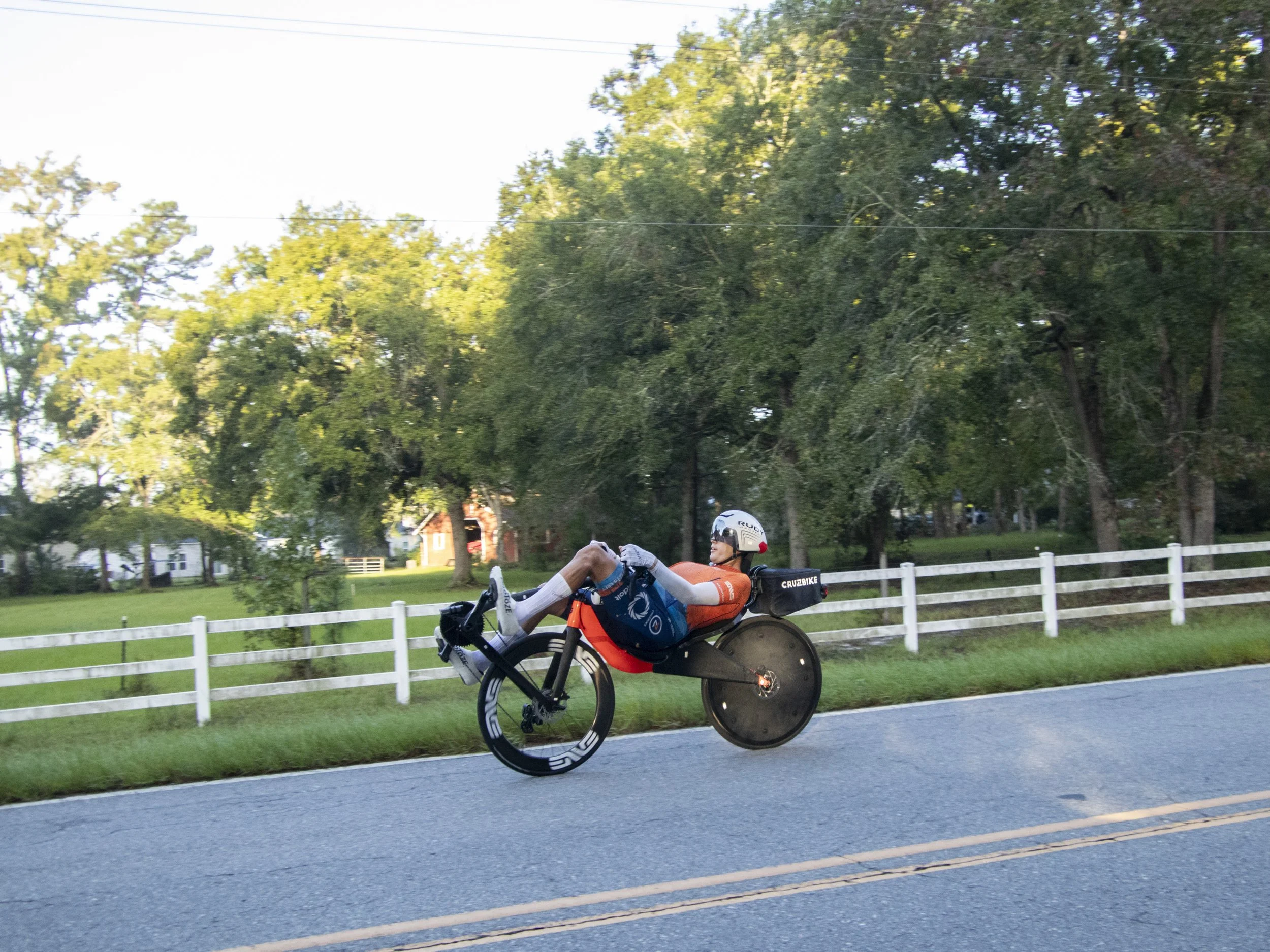
The Georgia 6-Hour Time Trial represented the final piece of a goal I set for myself at the beginning of 2026: sweep all four WUCA North American Championships.
The journey started with the 24-hour championship at Sebring in February, followed by the 12-hour championship at Calvin’s Challenge in Ohio, the Hoodoo 500 in Utah in August, and finally the six-hour championship in Georgia in September. I also set out to complete all four aboard the Cruzbike V20c, a recumbent built specifically for racing.
Learning to race the Cruzbike over the past year has essentially meant learning how to ride a bike all over again. There have been plenty of ups and downs—including crashes, stitches, countless position adjustments, and a lot of experimentation—but each event has increased my confidence. Earlier this year, I rode the V20c 2,401 miles in seven days for a new world record, and just two weeks before Georgia, I raced it for 500 miles and roughly 26,000 feet of climbing at the Hoodoo 500.
Georgia presented a different opportunity. Rather than completely burying myself, I wanted to use six hours of racing as a controlled test of the position, equipment, fueling, and a new custom seat pad I had built after experiencing significant lower-back discomfort at Hoodoo. It was also sandwiched between Hoodoo and the 420-mile Salt to Saint race, giving me another reason to be deliberate with the effort.
Getting there provided a little extra stress. This was my first time flying to a race with my bike in about 18 months, and a flight delay left Bailey and me stranded overnight in Dallas. Instead of arriving a full day early, we reached Georgia the day before the race. I assembled the bike and managed an hour-long test ride on the course that afternoon. Thankfully, everything worked flawlessly, the new seat felt good, and I was ready to race.
Race morning was extremely humid. I barely made the start after a last-minute hydration-hose issue, but once we were underway, everything settled into place.
My plan was to start around 300 watts and hold it for as long as it remained comfortable. I also wanted to complete the entire race without stopping. I carried two three-liter hydration bladders—one containing Formula 369 Endurance Carb Mix and another containing water—plus an additional bottle with 200 mg of caffeine for later in the race.
My fueling target was aggressive: 175 grams of carbohydrates, or roughly 700 calories, per hour. Over six hours, that meant approximately 4,200 calories consumed. I’ve spent considerable time training my gut to handle increasingly high carbohydrate intake, and everything went down exactly as planned.
After the opening few miles, I moved into the lead and settled into my effort. From there, the race was remarkably uneventful—which is exactly what you want in a six-hour time trial. I had to put a foot down twice at the turnaround because of traffic and had one uncomfortably close pass from a vehicle, but otherwise the course was excellent. The pavement was fast, traffic was manageable, and, most importantly given what came later for the 12- and 24-hour riders, we avoided the rain.
The equipment performed exactly as I hoped. The TRP drivetrain and Classified system were flawless. I ran an ENVE 6.7 up front and ENVE 3.4 with an EZ Gains disc cover in the rear. The Rudy Project Wing helmet also proved particularly useful in the heat and humidity with the vent cover removed.
Most importantly, the Cruzbike and my new seat setup passed the test.
I started the race around 27.5 mph at approximately 300 watts. By the finish, I had averaged 282 watts and actually increased the overall average speed slightly to 27.6 mph.
The official result was 165.69 miles in six hours at 27.6 mph.
That was enough for first overall, a new course record, and my fourth WUCA North American Championship of 2026—completing the championship sweep I had set out to accomplish at the beginning of the year.
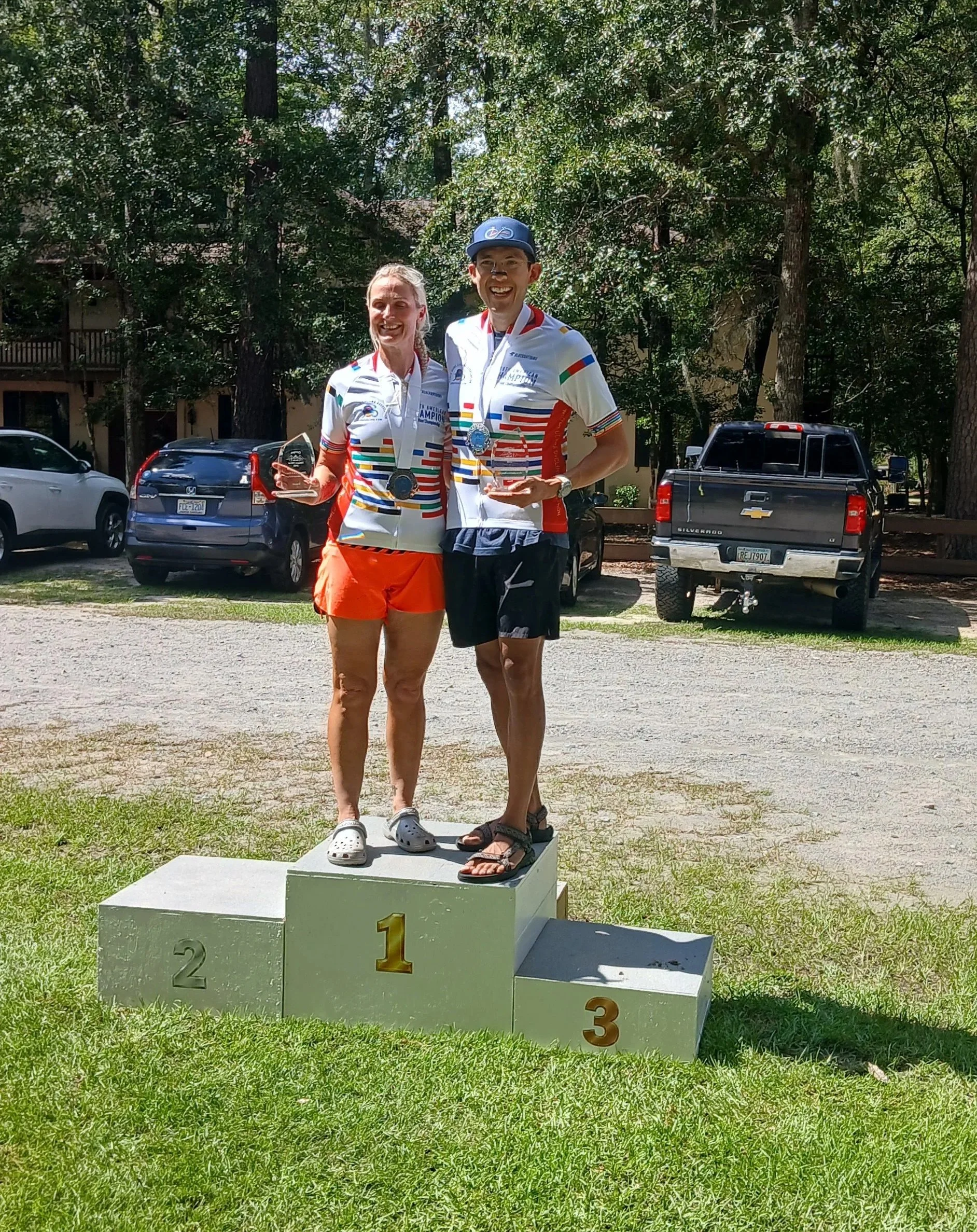
Kari Obermeyer & Matthew Lefthand | WUCA North American 6hr Champions
The result also further solidified my position in the WUCA World Cup, which I entered the season hoping to defend after winning it last year.
Beyond the racing, the trip turned into a memorable few days with the ultracycling and cycling community. We stayed with Michael Kenny and his son and had the chance to spend time together after the race. I shared another podium with women’s overall winner Kari Obermeyer and got to see the Rusty Dogs of War and plenty of other riders out there pushing themselves.
Unfortunately, the weather deteriorated dramatically after the six-hour event. The 12-hour competitors were hit with heavy rain, and the 24-hour field endured even worse conditions, resulting in many riders having to stop.
After the race, Bailey and I turned the trip into a bit of a cycling adventure. We drove to Atlanta and toured Wahoo headquarters with a friend who works there, and I even borrowed an upright bike for a ride. From there, we headed to Hilton Head Island and stayed with Larry Oslund and his wife. Larry showed us his collection documenting much of Cruzbike’s history, took us around the island, and even helped Bailey progress with riding a Cruzbike herself.
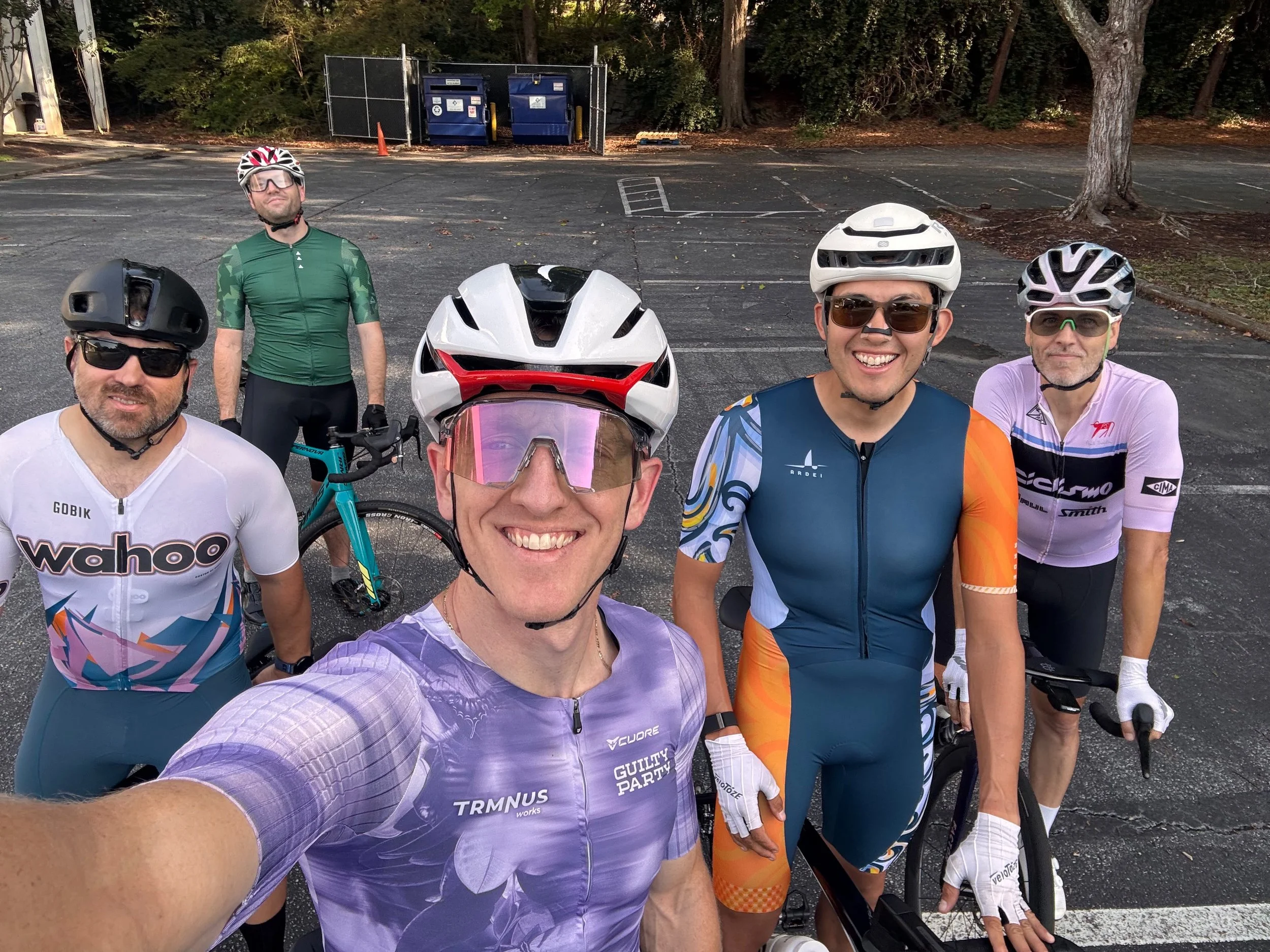
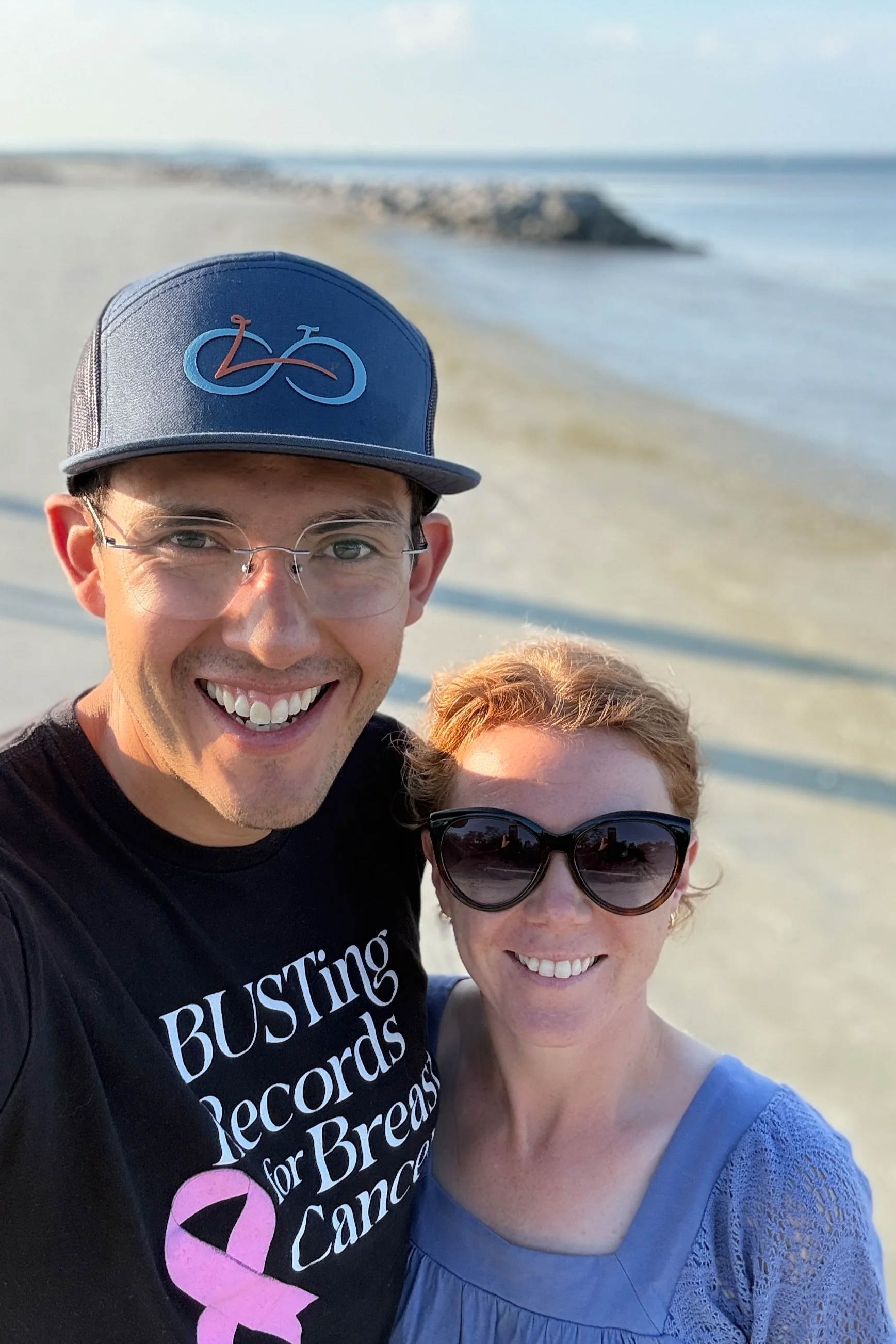
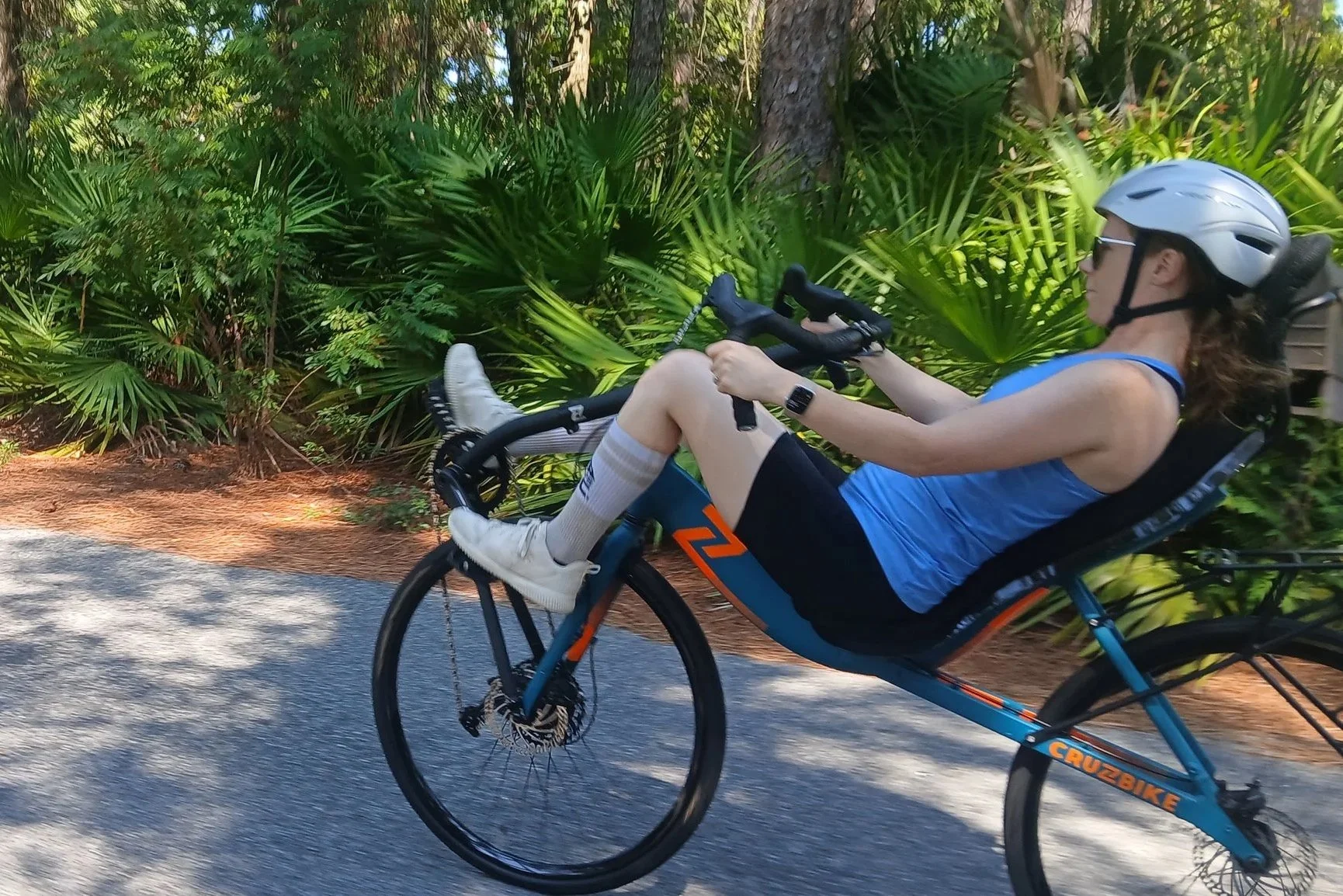
We spent time at the beach, saw dolphins, collected shells for our boys, rode bikes, and enjoyed a couple of days in South Carolina before heading home.
None of these events happen alone. Bailey handled travel, preparation, and all of the photography and video from the event while also capturing media for other riders. Having her there behind the scenes makes it possible for me to keep doing what I do.
Georgia ultimately delivered exactly what I hoped for: a successful equipment and fueling test, another course record and overall victory, and, most importantly, the completion of a season-long goal—four races, four WUCA North American Championships, all aboard the Cruzbike V20c.
